
Infertility Management
Infertility Treatment Singapore
If you are having trouble getting pregnant, be comforted that you are not alone – about 15% of couples struggle with infertility.
Seeing a gynaecologist for a fertility investigation can help you find the cause of infertility and allow you to receive a fertility treatment that is tailored to your needs.
Infertility is defined as the inability of a couple to become pregnant despite having regular and unprotected intercourse after a year. However, if you are over 35 years old and have been unsuccessful at conceiving after trying for 6 months, you are highly encouraged to seek fertility treatment as the risks of genetic disorders, miscarriage and infertility also increase with age.
Infertility is defined as the inability of a couple to become pregnant despite having regular and unprotected intercourse after a year. However, if you are over 35 years old and have been unsuccessful at conceiving after trying for 6 months, you are highly encouraged to seek fertility treatment as the risks of genetic disorders, miscarriage and infertility also increase with age.

Fertility Investigation & Treatment
During your consultation, our female gynaecologist will take a thorough approach to assess both partners. The assessment involves routine diagnostic tests to help uncover the cause of the problem.
Testing may involve:
- Thorough review of medical history
- Physical examination
- Hysterosalpingography (HSG): X-ray imaging to check if the fallopian tubes are open or blocked
- Ultrasound scan: To examine the uterus and ovaries for structural abnormalities
- Ovulation evaluation: To determine if and when ovulation is occurring
- Semen analysis: To assess sperm count, movement, and quality
- Hysteroscopy: A minimally invasive procedure to look inside the uterus. Samples of the endometrium may be taken for further testing
- Laparoscopy: A keyhole surgical procedure used to inspect the fallopian tubes, ovaries, and the outside of the uterus. If ovarian cysts, uterine fibroids, endometriosis, or pelvic adhesions are found, they can often be treated during the same procedure
Fertility Treatment Options
Once your test results are reviewed, our doctor will recommend the most suitable treatment for your situation. Depending on the underlying cause, treatment may include:
- Medication or surgery to remove abnormal growths or correct structural issues
- Ovulation induction to stimulate egg release
- Assisted Reproductive Technology (ART) procedures such as IUI, IVF, or ICSI
Each treatment plan is personalised to optimise your chances of conception in the safest and most effective way possible.

Advanced Fertility Treatments: SO-IUI, IVF and ICSI
Superovulation and Intrauterine Insemination (SO-IUI)
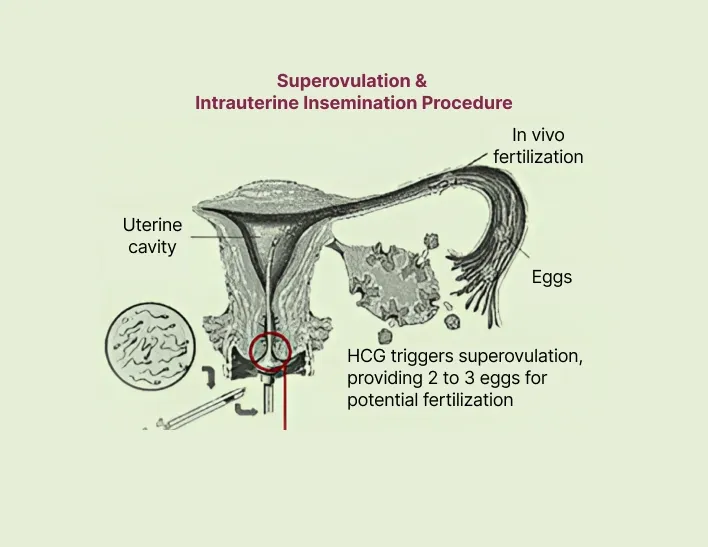
Both fallopian tubes must be patent in order for SO-IUI to be performed. Couples with mild endometriosis, mild male factor infertility, cervical abnormalities or unexplained infertility can undergo the procedure. Oral clomiphene citrate or gonadotropin (GnRH) injections are given to stimulate the ovaries to produce several mature follicles (eggs) at the same time. An ultrasound is regularly performed to detect the number and size of the eggs in the ovaries.
On insemination day, a fresh sample of the man’s semen is brought to the lab. The semen is then processed and placed directly into the womb through a fine tube. Medications are given to help facilitate implantation and pregnancy. A simple pregnancy test is performed 14 - 17 days following the insemination.
On insemination day, a fresh sample of the man’s semen is brought to the lab. The semen is then processed and placed directly into the womb through a fine tube. Medications are given to help facilitate implantation and pregnancy. A simple pregnancy test is performed 14 - 17 days following the insemination.
In-Vitro Fertilization (IVF)
In-vitro fertilization (IVF) uses sperm to fertilize eggs from the woman in a lab. This is offered to women with blocked or damaged fallopian tubes, severe endometriosis, ovulatory problems, unexplained infertility and severe sperm disorders.
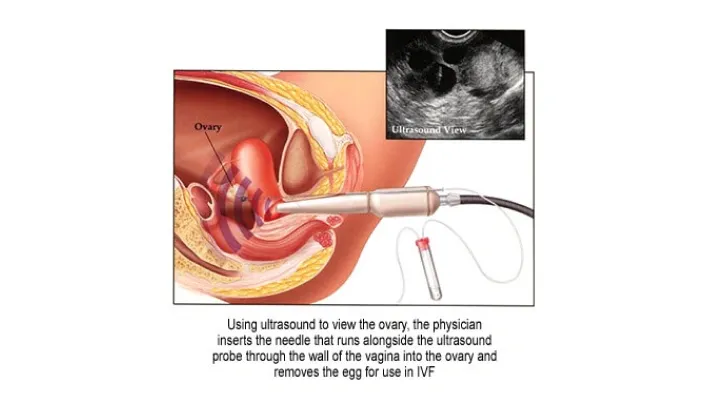
High-dose gonadotropin (GnRH) injections are given to stimulate several follicles (eggs) to grow, and their maturation progress is monitored with serial ultrasound scans. When these follicles are sufficiently developed, they are removed from the ovaries.
Under direct ultrasound guidance, a needle is inserted through the vagina and into the ovary to retrieve the follicles. These eggs are then combined with healthy sperm in the lab to see if they become fertilized.
High-dose gonadotropin (GnRH) injections are given to stimulate several follicles (eggs) to grow, and their maturation progress is monitored with serial ultrasound scans. When these follicles are sufficiently developed, they are removed from the ovaries.
Under direct ultrasound guidance, a needle is inserted through the vagina and into the ovary to retrieve the follicles. These eggs are then combined with healthy sperm in the lab to see if they become fertilized.
Intracytoplasmic Sperm Injection (ICSI)
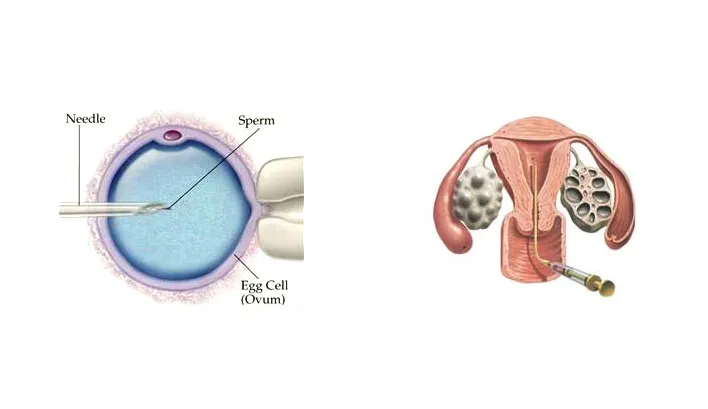
Similar to IVF, intracytoplasmic sperm injection (ICSI) involves fertilizing eggs in a lab. The difference is that with ICSI, only one sperm is injected directly into a viable egg to help facilitate a successful fertilization. This may be a good option if sperm quality is very low. ICSI can be performed alone or in combination with IVF.
A few days later, one or two fertilized eggs (embryos) are placed into the woman’s uterus through the vagina. Any extra embryos that are not used may be kept frozen for later use. Hormonal support is recommended to increase the chances of implantation and pregnancy. After 14 – 17 days following embryo transfer, a successful IVF can be confirmed through a pregnancy test.
A few days later, one or two fertilized eggs (embryos) are placed into the woman’s uterus through the vagina. Any extra embryos that are not used may be kept frozen for later use. Hormonal support is recommended to increase the chances of implantation and pregnancy. After 14 – 17 days following embryo transfer, a successful IVF can be confirmed through a pregnancy test.
We understand your concerns and are committed to supporting you every step of the way.
Call us at 6873 3383 or message us by clicking the button below.
Contact Our Clinic


Here for You, Every Step of the Way.
For a personalised consultation and treatment, please contact our clinic and we will be in touch with you shortly.