
Antenatal Screening
The decision as to whether to proceed with these invasive tests depends on each individual couple. We are committed to providing accurate information and support to help patients make the right choice.
Special screening is usually offered to women who have an increased risk of having an abnormal baby. This includes women who have had a previous child with Down Syndrome or other chromosomal disorders, women over 35 years old, or women who know that they or their baby’s father have an unusual chromosomal arrangement. It is not routinely offered to all women.


Amniocentesis involves obtaining amniotic fluid sample from the sac surrounding the fetus for testing. During this minimally invasive procedure, an ultrasound-guided fine needle is inserted into the womb through the abdomen. The fluid is then sent to a laboratory for analysis. Different tests can be performed on a sample of amniotic fluid, depending on the genetic risks and indications for the test.
This is usually performed between 16 - 20 weeks of pregnancy; and amniocentesis is associated with a 0.3% risk of miscarriage.
The results will usually be available within 2 weeks. In the unfortunate instance in which you have an abnormal result, we will gladly discuss the diagnosis and implications with you and give you ample time to make an informed decision as to the best course of action.
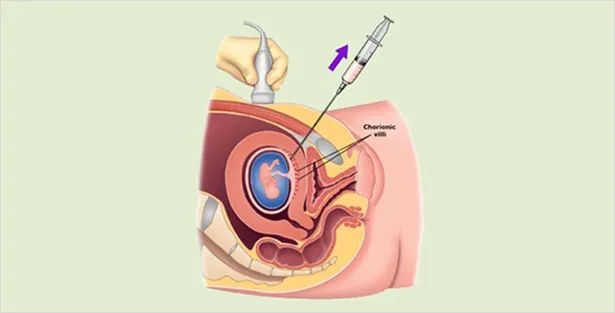
Chorionic Villus Sampling (CVS) is another diagnostic test that examines a small sample of placental tissue (chorionic villi), which shares the fetus’s genetic material. This test can detect chromosomal conditions such as Down Syndrome, as well as other genetic disorders like cystic fibrosis, thalassemia, and sickle cell anemia.
Unlike amniocentesis, CVS can be done earlier, typically between 11 – 12 weeks of pregnancy, with results available within 7 – 10 days. However, it carries a slightly higher risk of miscarriage (0.5 – 1%).
CVS allows for earlier diagnosis, giving expectant parents more time to consider and plan the next steps if any abnormalities are found.

Between 18 – 24 weeks of pregnancy, a detailed fetal anomaly scan is usually performed to assess your baby’s growth and development. This ultrasound examines key organs such as the brain, heart, lungs, kidneys, spine, and limbs to ensure they are developing normally.
While most pregnancies progress without complications, the scan helps detect major structural abnormalities, particularly in mothers with increased risk due to advancing age. It also provides valuable information about fetal growth, amniotic fluid levels, and placental position.
For parents who wish to see more lifelike images of their developing baby, our sister clinic, GynaeMD Women’s & Rejuvenation Clinic, offers 3D and 4D ultrasound scans. These scans provide a unique bonding experience by showing your baby’s features in greater detail.
However, 3D & 4D scans are not replacements for routine prenatal ultrasounds. They are best performed between 26 – 30 weeks of pregnancy for the clearest and most detailed images.
Measures estimated fetal weight, key growth parameters (head and abdominal circumference, femur length), amniotic fluid levels, and placental position. Performed between 24 – 41 weeks to monitor for growth restriction or macrosomia.
Evaluate fetal and umbilical cord blood flow to assess placental function and ensure healthy circulation.
Mothers record fetal movements at home to track activity levels. A noticeable decrease in movements should prompt a consultation with your doctor.
Measures the baby’s heart rate and patterns to assess overall wellbeing and detect any signs of distress.